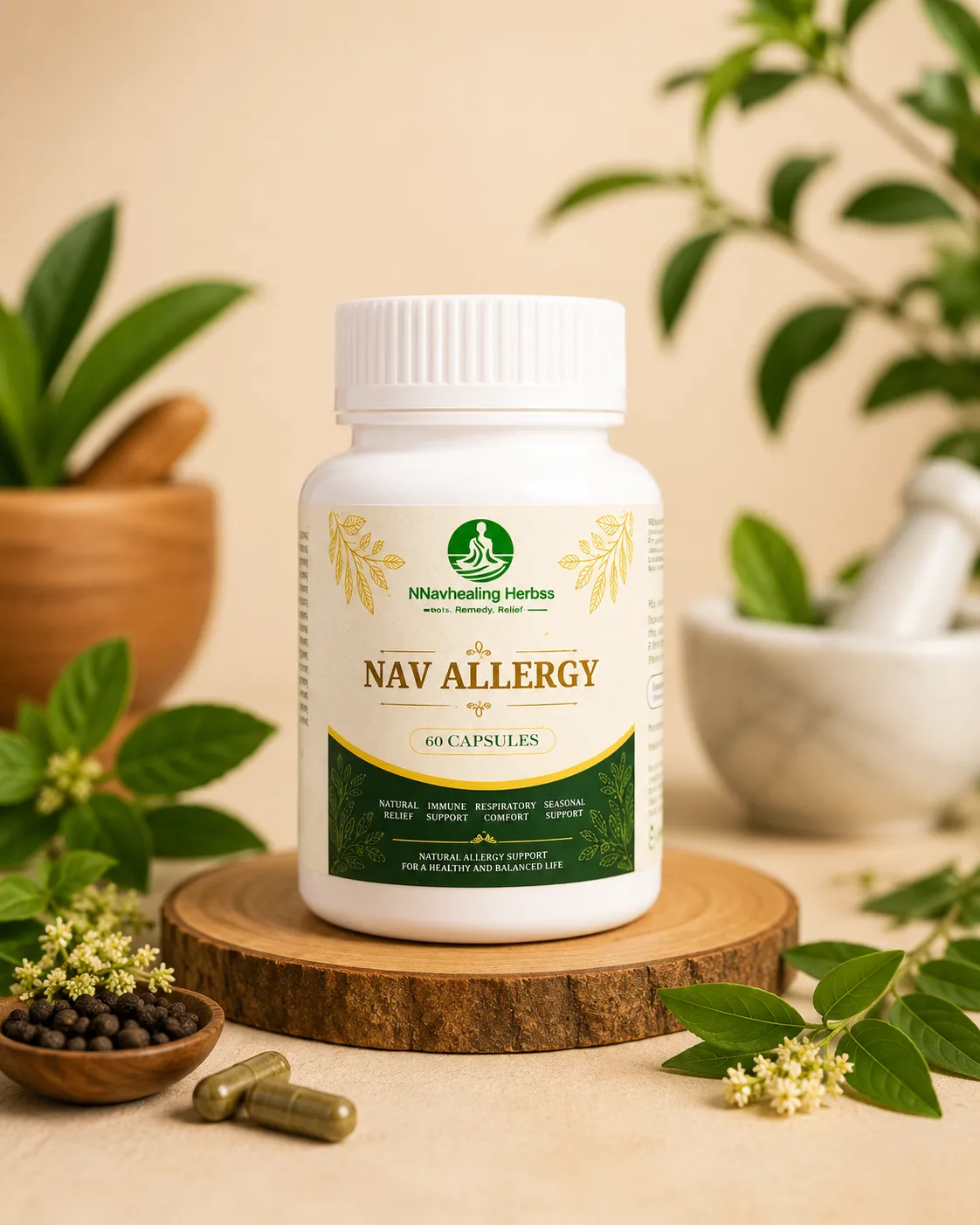
Most allergy formulations are built to suppress the reaction. Nav Allergy Capsules are built to change the terrain that makes the reaction possible in the first place.
This is the core difference between an antihistamine approach and a classical Ayurvedic approach — and it is why the two can work together, targeting different aspects of the same problem.
The three levels of allergic disease
In my clinical experience with chronic allergic conditions, almost every patient has involvement at three levels: the blood (where ama and inflammatory mediators circulate), the airways (where the immediate symptomatic response occurs), and the immune system (where the underlying hypersensitivity is encoded).
An effective long-term formula needs to address all three. Nav Allergy Capsules were built with this in mind.
Vasa — 40 mg — the respiratory anchor
Adhatoda vasica (Malabar nut) is the primary bronchial herb in classical Ayurveda. Its name in Sanskrit — Vasa — means "that which gives shelter." In respiratory disease, it lives up to that name.
Vasa contains vasicine and vasicinone, alkaloids that have been demonstrated in multiple studies to have bronchodilatory, expectorant, and anti-inflammatory effects on the respiratory mucosa. It reduces bronchospasm, helps clear excess mucus from the airways, and reduces the reactivity of the bronchial lining to allergens.
In allergic rhinitis — the sneezing, congestion, and watery discharge that characterise seasonal allergy — Vasa reduces mucosal oedema and supports nasal passage clearance. Most patients notice a reduction in acute symptoms within the first two weeks of use.
Haridra — 50 mg — the anti-inflammatory foundation
Curcuma longa (turmeric) requires no introduction in terms of its anti-inflammatory properties. In the context of an allergy formulation, its role is specific: it modulates the mast cell response — the immune cells that release histamine and other inflammatory mediators when triggered by an allergen.
Haridra inhibits the IgE-mediated degranulation of mast cells, which means it reduces the primary mechanism of allergic reaction rather than just blocking its downstream effects. This is what makes it a terrain-changing herb rather than a symptomatic one — it trains the immune response over time to react with less intensity.
At 50 mg in capsule form alongside Vasa and Manjistha, Haridra reaches a clinically relevant dose for immune modulation. Culinary turmeric in food — even daily consumption — does not reach therapeutic concentrations in the blood. The capsule form does.
Manjistha — 50 mg — the blood purifier
Rubia cordifolia is one of Ayurveda's most important rakta shodhaka (blood purifying) herbs. Its relevance to allergic disease is through the blood layer — the circulatory system that carries inflammatory mediators, ama compounds, and immune cells to the sites of allergic reaction.
When rakta dhatu carries a high ama load — as it consistently does in patients with chronic allergic skin conditions like urticaria, eczema, and contact dermatitis — the allergic reaction is amplified by the background inflammation already present in the blood. Manjistha clears this background, reducing the intensity of allergic reactions by reducing the inflammatory substrate they occur in.
For patients whose allergy presents primarily as skin reactions — hives, eczema flares, or persistent dermatitis — Manjistha is often the most impactful herb in the formula.
Tulsi — 30 mg — the immune adaptogen
Ocimum sanctum (holy basil) is present in Nav Allergy at a supporting dose — not for acute symptom relief, but for immune steadiness. Tulsi is classified in Ayurveda as a deepaniya (digestive stimulant) and a rasayana — a rejuvenative that builds ojas over time.
Its specific relevance here is its documented effect on Th1/Th2 immune balance. Allergic hypersensitivity is associated with a Th2-dominant immune response. Tulsi has been shown to modulate this balance toward Th1 activity — which, over months of consistent use, reduces the underlying allergic tendency.
What to expect
The first two weeks: reduction in acute symptoms — less sneezing, less congestion, less skin reactivity. This is primarily the Vasa and Haridra effect.
By 60 days: the terrain begins to shift. Allergy seasons that previously flattened you become manageable. Triggers that previously produced a severe reaction produce a milder one.
By 90 days and beyond: measurable reduction in the frequency of flare-ups. Some patients stop reacting to triggers that previously required antihistamine intervention.
Nav Allergy Capsules are not a cure for allergic disease. They are a long-term protocol for reducing allergic reactivity — which is a more honest and more achievable goal than a cure.

