
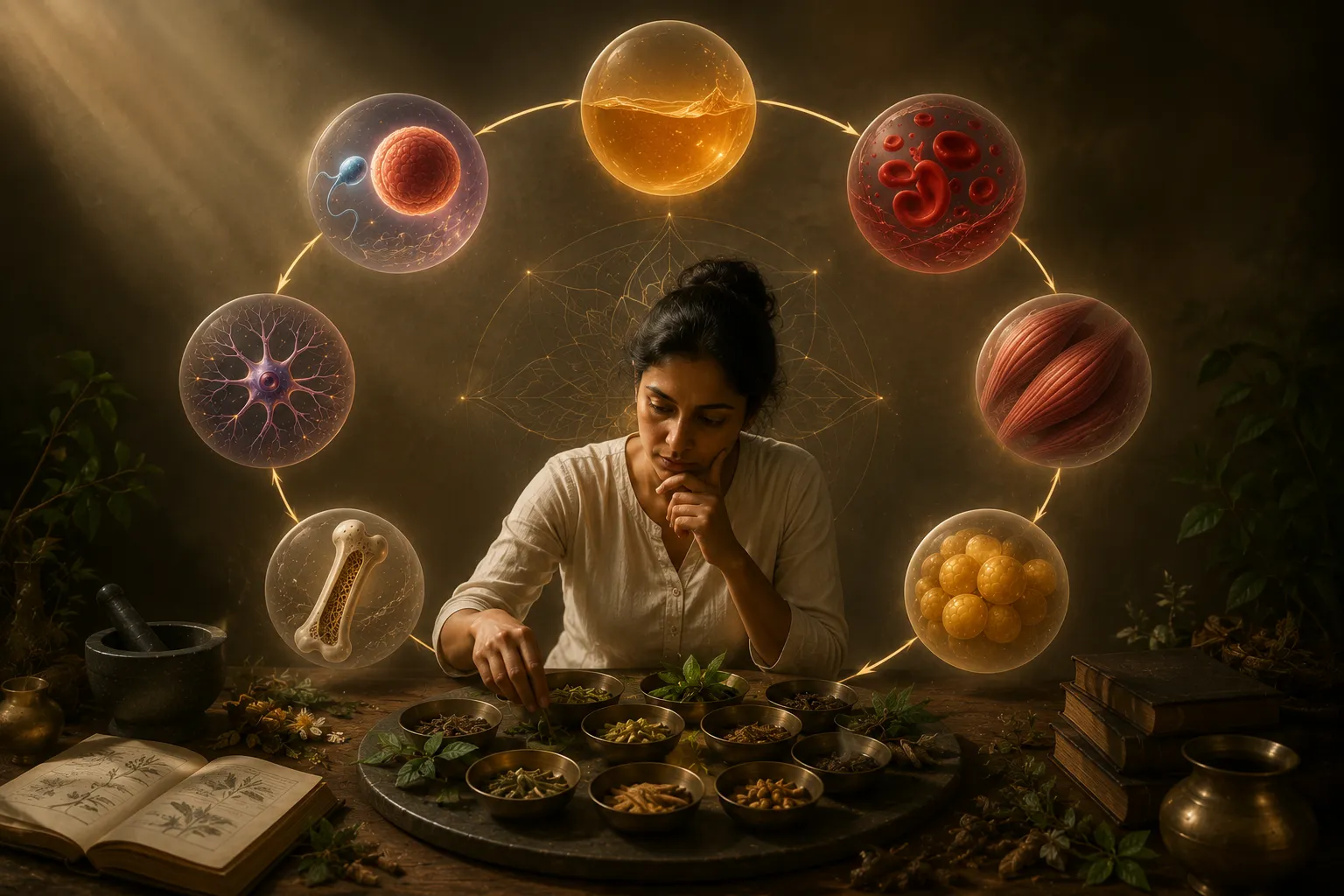
Classical Ayurveda describes seven dhatus: rasa, rakta, mamsa, meda, asthi, majja and shukra. They form a traditional framework for discussing nourishment and the body.
Traditional concepts and modern anatomy
Translations such as blood, muscle or bone can introduce the vocabulary, but the concepts are not exact equivalents of modern anatomical or laboratory measures.
Care decisions
A dhatu description does not establish a diagnosis or demonstrate that a formulation restores a tissue. Symptoms, medical history, examination and appropriate tests remain important to individual care.
This article is for education and does not replace diagnosis or treatment by a qualified doctor. Do not stop or change prescribed medicine without medical advice. Editorial policy and corrections