
Quick answer: The best evidence so far is one small, well-designed trial from 2026. In 70 women with PCOS (now called PMOS), a standardised Shatavari root extract taken for 12 weeks did not change ovarian volume, hormone levels, BMI or blood sugar compared with placebo. It did lower perceived stress, reduce follicle count on ultrasound and slightly increase endometrial thickness. Shatavari looks safe in the short term and may be a reasonable supportive herb, but it is not a proven treatment for PCOS on its own.
What Shatavari is
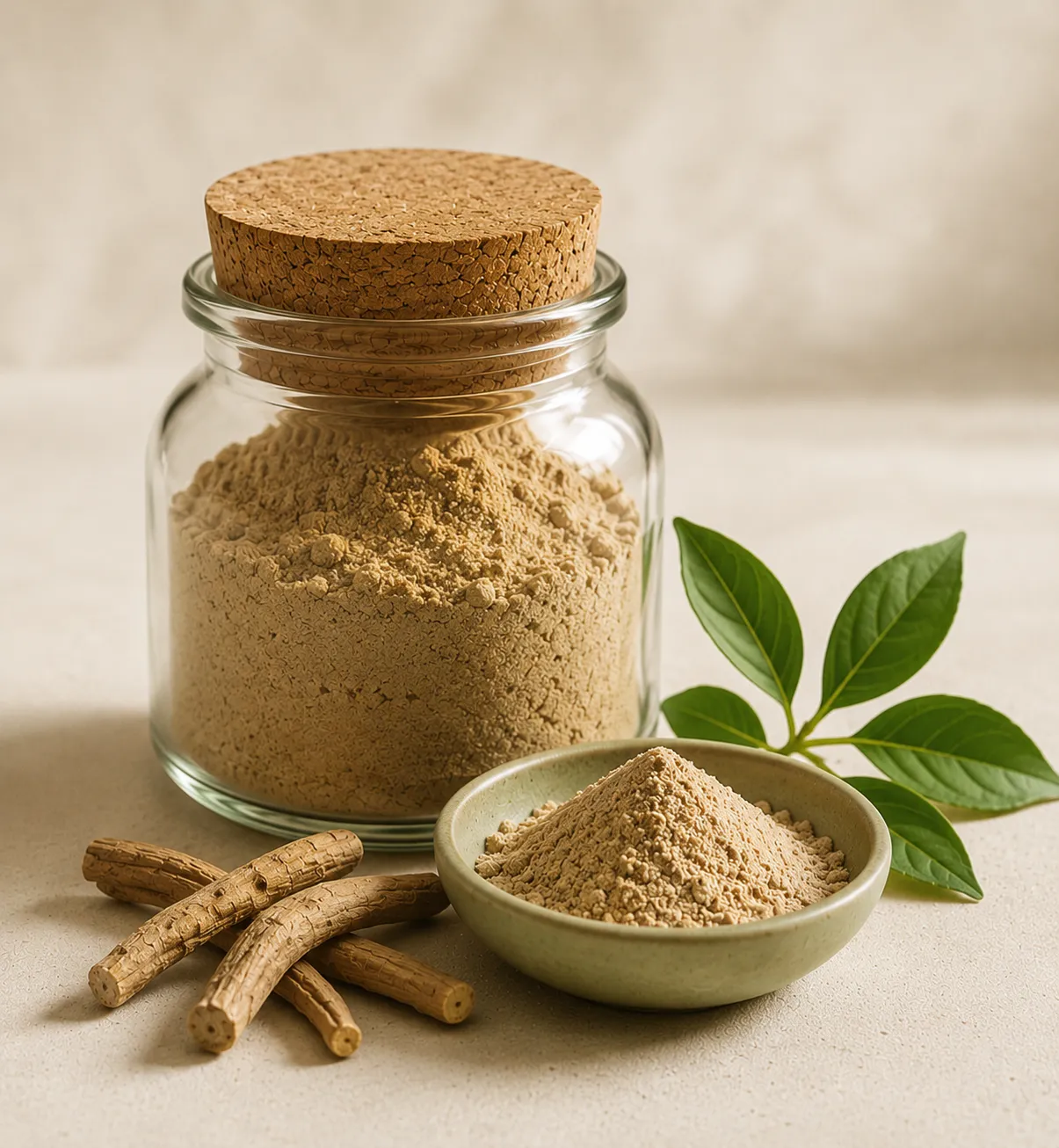
Shatavari (Asparagus racemosus) is a climbing plant found across India and the Himalayas. The tuberous roots are dried and powdered, or prepared with milk or ghee in classical recipes. Its name is often translated as "she who has a hundred husbands", a reference to its traditional reputation as a tonic for women from the first period to menopause.
In Ayurvedic pharmacology, Shatavari is described as sweet and bitter in taste, cooling in energy, and nourishing (a rasayana). That is why it is traditionally used where there is depletion, dryness or heat, rather than as a quick-acting remedy.
The 2026 trial: what it tested
Researchers in India ran a randomised, double-blind, placebo-controlled trial, published in Frontiers in Endocrinology in February 2026.
- Who: 70 women aged 20–40 with PCOS diagnosed by the Rotterdam criteria (66 completed the study)
- What: 300 mg a day of a standardised Shatavari root extract (13:1 extract, at least 10% shatavarins) or a placebo
- How long: 12 weeks
- Funding: no financial support declared; the extract was supplied by its manufacturer
What it found
| Outcome | Shatavari vs placebo | What it means |
|---|---|---|
| Ovarian volume | No significant difference | The main ovarian size measure did not improve |
| Follicle count on ultrasound | Decreased significantly | A possible effect on ovarian appearance; it does not by itself show ovulation returned |
| Endometrial thickness | Increased modestly | A small change in the womb lining; its clinical meaning is uncertain |
| Perceived stress (PSS-10) | Fell by about 6.6 points vs 1.8 with placebo | The clearest benefit, though stress was self-reported |
| LH, FSH, testosterone, oestradiol, progesterone, DHEA-S | No significant differences | No measurable hormone rebalancing in 12 weeks |
| BMI, blood sugar, insulin, lipids | No significant changes | No effect seen on the metabolic side of PCOS |
| Side effects | Mild to moderate in 11.4% vs 8.5% with placebo; none serious | Well tolerated in the short term |
The authors note important limits: a small sample, only 12 weeks, single hormone measurements, and no direct measurement of ovulation, cycle regularity or fertility.
What this means in practice
This trial is useful precisely because it is honest. It tells us Shatavari is not a stand-alone hormone treatment for PCOS, and that nobody should stop metformin, the pill or other prescribed treatment in favour of it. It also suggests Shatavari may help with stress and has some effect on the ovary and endometrium that deserves longer, larger studies.
Earlier articles on this site, including an earlier version of this one, described clinical evidence for Shatavari in PCOS more confidently than the research supports. We have corrected that here.
Can these findings apply to other formulations?
This trial used a concentrated, standardised extract. Its results cannot be applied directly to root powders, different doses or multi-ingredient products. A finished formulation needs its own clinical evidence.
How Shatavari is traditionally taken
Classically, Shatavari powder is taken with warm milk, once or twice a day, for at least two to three months. Tonic herbs like this are not expected to act within days. If you are taking a Shatavari product, follow the dose on the label or the dose your doctor gives you.
Who should be careful
- Pregnant or breastfeeding women, unless advised by their doctor
- Anyone with a hormone-sensitive condition, such as a history of breast cancer, fibroids or endometriosis, until they have discussed it with their doctor
- People taking several prescription medicines, including diabetes or thyroid medicines
- Anyone allergic to asparagus
When to see a doctor
See a doctor if your periods are usually more than 35 days apart, have stopped for three months, or come with new facial hair, severe acne, or rapid weight gain. Herbal support works best alongside a proper diagnosis.
Frequently asked questions
Does Shatavari help PCOS?
A 2026 placebo-controlled trial found that Shatavari extract did not change hormone levels, ovarian volume, BMI or blood sugar in women with PCOS over 12 weeks. It did reduce stress scores and follicle count. It may be supportive, but it is not a proven stand-alone treatment.
Can Shatavari regulate periods?
Shatavari is traditionally used for menstrual health, but the 2026 trial did not measure cycle regularity, so there is no good clinical evidence yet that it regulates periods.
Does Shatavari affect hormones?
In the 2026 trial, LH, FSH, testosterone, oestradiol, progesterone and DHEA-S did not differ significantly between the Shatavari and placebo groups after 12 weeks.
Is Shatavari safe to take every day?
In the 2026 trial, daily Shatavari extract for 12 weeks caused no serious side effects. Long-term safety data are limited, so check with your doctor if you are pregnant, breastfeeding, have a hormone-sensitive condition, or take other medicines.
Can I take Shatavari with myo-inositol or metformin?
There are no known dangerous interactions reported in the trial, but combinations have not been studied. Do not stop prescribed medicine, and ask your doctor before combining supplements.
Is the Shatavari in Ovanav the same as in the study?
No. Ovanav uses Shatavari root powder, while the study used a concentrated standardised extract. The trial results cannot be applied directly to Ovanav.
This article is for education and does not replace diagnosis or treatment by a qualified doctor. Do not stop or change prescribed medicine without medical advice. Editorial policy and corrections